A Must-Read Guide to Buying Horse Ornaments
Placing a horse ornament in your home is about far more than decoration. For thousands of years, the horse has been one of the most symbolically powerful animals in human consciousness — representing strength, freedom, courage, and protection. A thoughtfully chosen horse figurine, placed where you see it every day, becomes a quiet reminder: stay strong, stay free, stay true to yourself.
In this guide, we’ll explore the spiritual meanings behind different horse poses, the craft and materials that bring them to life, the types of horse ornaments available, and a simple step-by-step method to help you find the piece that truly resonates with you.
In this article,you will learn:
- 8 Powerful Meanings of Horse Ornaments
- The Craftsmanship of Horse Ornaments: How Materials Convey Spirit
- Types of Horse Ornaments — Find Your Spiritual Match
- Placement and positioning of horse ornaments
1. 8 Powerful Meanings of Horse Ornaments
Strength & Resilience
Horses possess extraordinary physical power and endurance, capable of traveling vast distances through harsh conditions. They symbolize the will to keep going, even when the path is hard.
In Western tradition, the horse has been the embodiment of knighthood, courage, and loyalty since medieval times. A standing horse with defined musculature and firm footing on the ground powerfully conveys this message.
Best for: Anyone facing a challenge, entrepreneurs, athletes, especially anyone who needs a daily reminder to persevere.
Suggested pose: Standing horse with strong, grounded posture.
Freedom & Independence
The image of wild mustangs galloping across open plains is one of the most powerful symbols of living unrestrained, staying true to yourself, and refusing to be defined by others.
This meaning resonates across cultures — from the free-roaming horses of the American West to the nomadic horse cultures of Central Asia. A galloping horse with flowing mane captures this spirit perfectly.
Best for: Independent thinkers, travelers, and those who value personal freedom above all.
Suggested pose: Galloping horse or wild horse with wind-swept mane.
Courage & Adventure
From Roman warhorses to the cowboys’ trusted mounts of the American frontier, horses have always stood beside humans in moments of risk, exploration, and bold action. They remind us that life is worth the risk, and great rewards lie beyond our comfort zones.
Best for: Risk-takers, early adopters, and anyone standing at the edge of a big decision.
Suggested pose: Rearing horse or any dynamic, action-filled pose.
Protection & Loyalty
Horses were among the first animals domesticated by humans, working alongside us for millennia. Historically, horse imagery served as protective symbols — from the crescent-shaped horse ornaments of ancient Rome, believed to hold protective powers, to the wooden “koniki” figurines of Siberia, regarded as household guardian spirits.
A horse ornament is not just decoration — it’s a silent guardian. A horse with a gentle, lowered head or a classic horseshoe speaks directly to this meaning.
Best for: Those who value family, long-term relationships, and a sense of safety at home.
Suggested pose: Horse with lowered head, gentle expression, or a horseshoe.
Nobility & Dignity
The horse carries itself with a unique grace — it serves without losing its inherent dignity. This reminds us that no matter our circumstances, we can hold onto our poise and self-respect.
Best for: Those who appreciate refinement, understated elegance, and a quiet sense of pride.
Suggested pose: High-headed, elegant standing horse in bronze.
Success & Ambition
A horse moving forward at full speed is the ultimate image of drive, ambition, and forward motion. It reminds us that action brings results, and the only way to arrive is to keep moving.
Best for: Professionals, entrepreneurs, and anyone working toward a meaningful goal.
Suggested pose: Galloping or leaping horse with forward-leaning lines.
Inspiration & Creativity
In Greek mythology, Pegasus — the winged horse — struck the ground with his hoof and brought forth the fountain of inspiration. Horses have long been associated with creative breakthrough and fresh perspective.
Best for: Designers, writers, artists, and anyone in need of a creative spark.
Suggested pose: Winged horse (Pegasus) or abstract/surreal horse forms.
Peace & Companionship
Not every horse is running. A horse standing quietly, grazing, or looking at you with gentle eyes speaks to a different need: calm, presence, and wordless companionship.
Best for: Those seeking inner peace, quiet moments, or a calming corner in their home.
Suggested pose: Resting horse, standing still, or ceramic/wooden pieces with soft, rounded lines.
In short: One horse ornament can mean many different things to different people. Choosing one is really about choosing the kind of energy you want to bring into your daily life.
2. The Craftsmanship of Horse Ornaments: How Materials Convey Spirit
The material of a horse ornament is not just about durability — it’s a language of its own. Every material brings a different emotional texture, reinforcing or softening the spiritual meaning you’re looking for.
Material & Spirit Reference Table
Material | Spiritual Vibe | Best Supports These Meanings | Feel & Look | Best Placed In |
|---|---|---|---|---|
| Bronze | Timeless, stately, historical | Strength, nobility, protection | Heavy, warm, develops natural patina | Study, living room, collector’s shelf |
| Wood | Warm, earthy, living | Peace, companionship, resilience | Warm to touch, each piece unique | Bedroom, nature-inspired spaces |
| Cast Iron | Raw, honest, unpolished | Courage, freedom, wildness | Rough, heavy, industrial feel | Industrial interiors, entryways, gardens |
| Ceramic | Delicate, soft, handcrafted | Elegance, companionship, inspiration | Smooth, glazed, paintable | Sideboards, bookshelves, feminine spaces |
| Marble/Stone | Cool, restrained, eternal | Nobility, resilience, inspiration | Cold, polished, substantial | Modern minimalism, high-end interiors |
| Brass | Warm-gold, vintage, welcoming | Protection, success, dignity | Golden sheen, develops patina over time | Vintage interiors, entryways, mantels |
Craft Details That Deepen Emotional Impact
A truly moving horse ornament draws its spiritual power from subtle craft details:
Capture of Motion – A great galloping horse feels like it’s moving even when it sits still. The flow of the mane, the tension in the muscles, the split-second suspension of hooves in the air — these details determine whether “freedom” and “courage” feel alive or flat. Skilled sculptors freeze a 0.1-second moment into eternity.
Expression in the Eyes – The eyes are the soul of the piece. A gentle gaze brings “companionship and protection.” A firm, focused look brings “strength and courage.” A wild, alert expression brings “freedom.” Every glance you exchange with your ornament sends you a quiet message.
Surface Texture – Smooth surfaces convey “restraint and refinement” — ideal for nobility and elegance. Rough or hammered surfaces convey “rawness and honesty” — ideal for courage and freedom. Retained casting marks speak of “craftsmanship and authenticity.”
Patina & Distressing – On metal pieces, the natural oxidation that develops over time is not a flaw — it’s a mark of time well spent. It gives the piece a story, a history, and reinforces the feeling of heritage and permanence.
3. Types of Horse Ornaments — Find Your Spiritual Match
Now that you understand the meanings and materials, let’s look at the different types of horse ornaments. Each classification helps narrow down your choice to the one that fits — not just your home, but you.
By Pose — Every Posture Speaks a Different Language
| Pose | Spiritual Message | Best For | Recommended Materials |
|---|---|---|---|
| Galloping | Ambition, freedom, adventure — always in motion | Entrepreneurs, travelers, those seeking breakthrough | Bronze, cast iron |
| Rearing | Courage, strength, defiance — rising to challenges | Anyone facing a hurdle, needing boldness | Bronze, brass |
| Standing | Dignity, strength, groundedness — solid as a rock | Those who value refinement and stability | Marble, bronze |
| Resting | Peace, safety, comfort — the quiet, reassuring presence | Seekers of calm, introverts, bedroom spaces | Wood, ceramic |
| Head/Bust | Connection, contemplation, spiritual dialogue | Deep thinkers, those seeking inner connection | Bronze, stone |
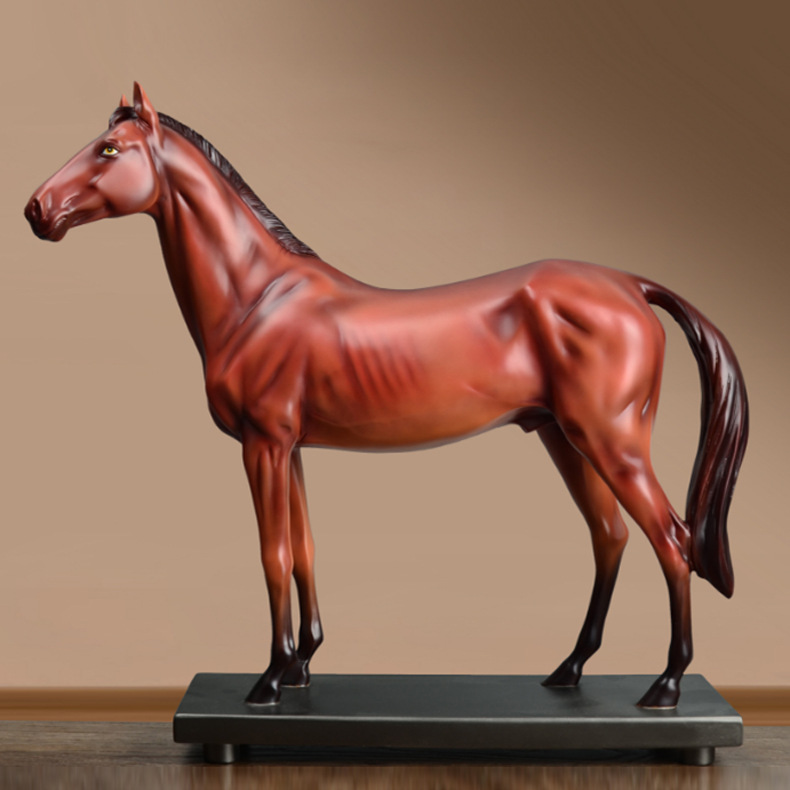
By Style — Let Your Ornament Talk to Your Home
Realistic Style – Every muscle, hair, and proportion is rendered with lifelike precision. It emphasizes vitality and presence, delivering its message directly and powerfully. You can almost hear it breathe. Ideal for traditional homes and studies.
Abstract Style – Minimal lines and simplified forms. It captures the essence rather than the likeness. The beauty of abstract horse ornaments is that they don’t tell you “this is a horse” — they let you feel it. That participation makes the connection deeply personal. Ideal for modern minimalism and Scandinavian interiors.
Vintage/Distressed Style – Aged surfaces and time-worn finishes speak of heritage and story. A distressed horse ornament feels like it came from your grandfather’s study or a forgotten European estate — which makes its message of “protection” and “dignity” feel extraordinarily real. Ideal for industrial, farmhouse, and eclectic spaces.
Rustic/Natural Style – Raw textures, minimal polishing, materials left in their natural state. Unfinished wood grain, rough casting edges, natural cracks in stone — these “imperfections” say “honesty” and “endurance.” Ideal for wabi-sabi, naturalist, and farmhouse interiors.
By Size — The Reach of Spiritual Presence
- Small (< 15 cm / 6 in): Personal, intimate. Lives on your desk or nightstand. Every glance is a private conversation between you and your ornament.
- Medium (15 – 40 cm / 6 – 16 in): A shared focus. Placed on a sideboard, entry table, or bookshelf — it becomes a subtle presence that family and guests alike can feel.
- Large (> 40 cm / 16 in): A spatial statement. The first thing people see when they enter. It doesn’t just decorate — it defines the spiritual tone of your entire home.
Mix & Match — Layer Your Spiritual Energies
You don’t have to choose just one. A thoughtful combination can create a richer emotional landscape:
- Forward & Rest: A galloping horse in the living room (ambition) + a resting horse in the bedroom (peace). Energized by day, soothed by night.
- Big & Small: A medium standing horse on the upper shelf + a small resting horse below — creating visual rhythm and layered meaning.
- Contrast in Materials: A bronze galloping horse + a wooden resting horse. Strength meets warmth. The dialogue between materials enriches the space.
Last year, our company was expanding — new business lines launching, everyone firing on all cylinders. My boss, Mr. Chen, was leading the charge with more energy than ever.
Then came the office move. I wanted to give him a gift.
After careful selection, a bronze horse ornament was finally chosen. This bronze horse, front hooves in the air, body arched upward, mane flying back, as if about to clear an invisible hurdle. The sculptor called it “Breaking Through.” It doesn’t leap in panic — it leaps because it sees what lies ahead and decides to go for it.
That was it. That spirit — it was him.
In his new office, he placed it across from his desk, facing him. Every time he looks up, it’s like a horse charging toward him — and he meets it head-on.
4. Placement and positioning of horse ornaments
Where you place a horse ornament matters more than you might think. Different rooms carry different energies, and the right placement can amplify the spiritual meaning of your piece. Here’s a practical guide to positioning horse decor throughout your home.
Living Room — The Heart of the Home
The living room is where families gather and guests are welcomed. It’s the ideal space for horse ornaments that project positive, open energy.
| Type of Piece | Best Spot | What It Brings |
|---|---|---|
| Galloping or rearing horse | Mantelpiece, one side of the media console | Adds vitality and ambition to the space; becomes a natural conversation starter |
| Medium-sized standing horse | Sideboard, coffee table | Grounds the room with stability and dignity |
| Horse head bust | Middle shelf of a bookcase, wall ledge | Sits at eye level to create a sense of visual “connection” and contemplation |
Best materials: Bronze, marble, ceramic (match to your interior style)
Tip: Face the ornament toward the seating area or the main entrance — let its energy be directed toward the people in the room, not facing a wall.
Entryway / Foyer — First Impressions & Welcoming Energy
The entryway is where energy enters your home. This space calls for horse ornaments that carry protective and welcoming meanings — setting a positive tone the moment anyone walks in.
| Type of Piece | Best Spot | What It Brings |
|---|---|---|
| Large horse head or full-body sculpture | Center of the console table | Creates a striking first impression; conveys strength and elegance |
| Horseshoe | Above the door frame or on the inner wall | A Western tradition — the classic symbol of good luck and protection, believed to “hold the luck in” |
| Medium standing horse | Entryway side table | Greets you with a steady, reassuring presence as you come home |
Best materials: Brass, cast iron, bronze (substantial materials that feel solid and reassuring)
Tip: In Western tradition, a horseshoe should be hung with the open end facing upward so the luck “doesn’t run out.” This is one of the most popular protective symbols for entryways.
Study / Home Office — Focus & Drive
The study is where you think, decide, and create. This space needs horse ornaments that motivate action and spark inspiration.
| Type of Piece | Best Spot | What It Brings |
|---|---|---|
| Small galloping or rearing horse | Top-left corner of your desk (often considered the “energy corner”) | A daily reminder to keep moving forward — ideal for those chasing big goals |
| Horse head bust | Middle shelf or side of the desk | The “thoughtful gaze” that encourages focus and deep thinking |
| Winged horse or abstract horse | Windowsill or top shelf | Sparks creative inspiration — perfect for designers, writers, and creative professionals |
Best materials: Bronze, solid wood, brass (warm, tactile materials that feel inviting rather than cold)
Tip: A galloping horse should face toward you — as if it’s charging in your direction. This symbolizes opportunities and progress coming your way. If it faces the door, it suggests opportunity is “arriving soon.”
Bedroom — Rest & Quiet Companionship
The bedroom is for rest and restoration. This is a space for calm, gentle energy — not stimulation. Horse ornaments here should soothe and comfort, not excite.
| Type of Piece | Best Spot | What It Brings |
|---|---|---|
| Resting horse or standing horse with lowered head | Nightstand, dresser | A gentle reminder that “it’s okay to rest” — helps ease anxiety |
| Small ceramic or wooden horse | Windowsill, bookshelf | Soft materials and gentle poses create a warm, private atmosphere |
| Minimalist line-art horse | Wall art or small ledge | A subtle presence that doesn’t dominate, yet offers quiet companionship |
Best materials: Solid wood, ceramic, matte-finished pieces (avoid cold or highly reflective surfaces)
Tip: Avoid galloping or rearing horses in the bedroom — their dynamic energy can keep your mind active when you need to wind down. Also, it’s best not to position a horse head directly facing your bed; while there’s no scientific rule against it, the feeling of being “watched” as you sleep can be subtly unsettling for many people.
Dining Room / Kitchen — Nourishment & Togetherness
The dining room and kitchen are spaces of nourishment, abundance, and family connection. Horse ornaments here should reflect warmth and gratitude.
| Type of Piece | Best Spot | What It Brings |
|---|---|---|
| Gentle standing or resting horse | Sideboard, windowsill | Symbolizes “abundance in the home” and makes mealtimes feel warmer |
| Tack-inspired decor (stirrups, bits) | Wall, open shelving | Horse-tack elements add rustic/equestrian charm |
| Small horseshoe | Kitchen window frame, pantry door | A little symbol of “protection over the food and family” |
Best materials: Ceramic, brass, distressed metal (warm, lived-in textures)
Tip: Place horse ornaments on the sideboard at or below eye level to avoid any sense of visual pressure during meals. A horse with a lowered, gentle head feels most at home here.
Outdoor / Garden — A Connection to Nature
The garden is where your home meets the natural world. This space calls for weather-resistant, natural-looking horse ornaments that blend with the outdoors.
| Type of Piece | Best Spot | What It Brings |
|---|---|---|
| Cast iron galloping or standing horse | Garden path, center of lawn | Complements plants and greenery; evokes a sense of freedom in nature |
| Stone horse sculpture | Entry gate, near a pond | The permanence of stone suggests “enduring protection over the home” |
| Weathered/distressed metal horse | Patio, along the fence | Ages beautifully over time, becoming one with the landscape — a living piece of art |
Best materials: Cast iron, stone, weather-treated bronze
Tip: Wood and ceramic pieces should not be placed outdoors — wood will crack and warp, and ceramic can chip or fade in the elements. Cast iron and stone are the safest bets for outdoor use.
Do’s & Don’ts for Horse Ornament Placement
Here are a few practical — and some traditionally inspired — considerations to keep in mind. We offer them as gentle suggestions rather than strict rules:
| Consideration | Why It Matters | What to Do Instead |
|---|---|---|
| Don’t place a galloping horse directly facing the front door | Some traditions say it “charges in” too aggressively; more practically, a leaping horse right in your face as you enter can feel visually overwhelming | Angle it slightly, or place it on a side table rather than directly in front of the entrance |
| Avoid galloping/rearing horses in the bedroom | Dynamic poses can subtly stimulate the mind, making it harder to relax | Choose resting or quietly standing poses for restful spaces |
| Don’t position a horse head directly facing your bed or sofa | The feeling of being “stared at” can create subconscious discomfort over time | Turn the head slightly to the side, or place it at an angle where it’s visible but not staring straight at you |
| Replace damaged ornaments | A broken leg or chipped surface can carry an unintended sense of “loss” or “decline” | Repair it or replace it — a complete, well-maintained piece feels more positive |
| Avoid overcrowding | Too many horse ornaments in one space dilute the impact of each | Stick to 3–5 pieces per room at most — vary sizes and poses to create visual rhythm |
Quick Reference — Find Your Placement by Need
| What You Want to Feel | Best Room | Best Pose | Best Material |
|---|---|---|---|
| Encouragement & drive | Study, office | Galloping (facing you) | Bronze, brass |
| Protection & security | Entryway, foyer | Horseshoe, standing horse | Cast iron, brass |
| Peace & companionship | Bedroom, reading nook | Resting, lowered head | Wood, ceramic |
| Inspiration & creativity | Studio, office | Winged horse, abstract form | Bronze, stone |
| Warmth & abundance | Dining room, kitchen | Gentle standing horse | Ceramic, brass |
| Freedom & nature | Garden, patio | Galloping (outdoor) | Cast iron, stone |
Final Thought
The right placement isn’t about following rules — it’s about intention. Every time you decide where to put a horse ornament, you’re having a quiet conversation with yourself about what that space needs. Place it where it speaks to you, where it catches your eye at just the right moment, and where it reminds you of the quality you want to carry into that room.
A well-placed horse ornament doesn’t need to say anything. You’ll feel it.